
Light & Circadian Rhythm
Light & Circadian Rhythm covers how daylight reaches the interior, how glare and solar heat are managed, and how electric lighting behaves across the day. In Central Texas the two goals pull against each other: the sun is intense and cooling loads are high, so the reflex is small or heavily tinted glazing, while daylight access argues for well-placed, well-shaded openings instead. The physiology of light and the human circadian system is an active research area — the mechanism is well established, but design thresholds for houses are not settled, so we specify conservatively and say what is known.
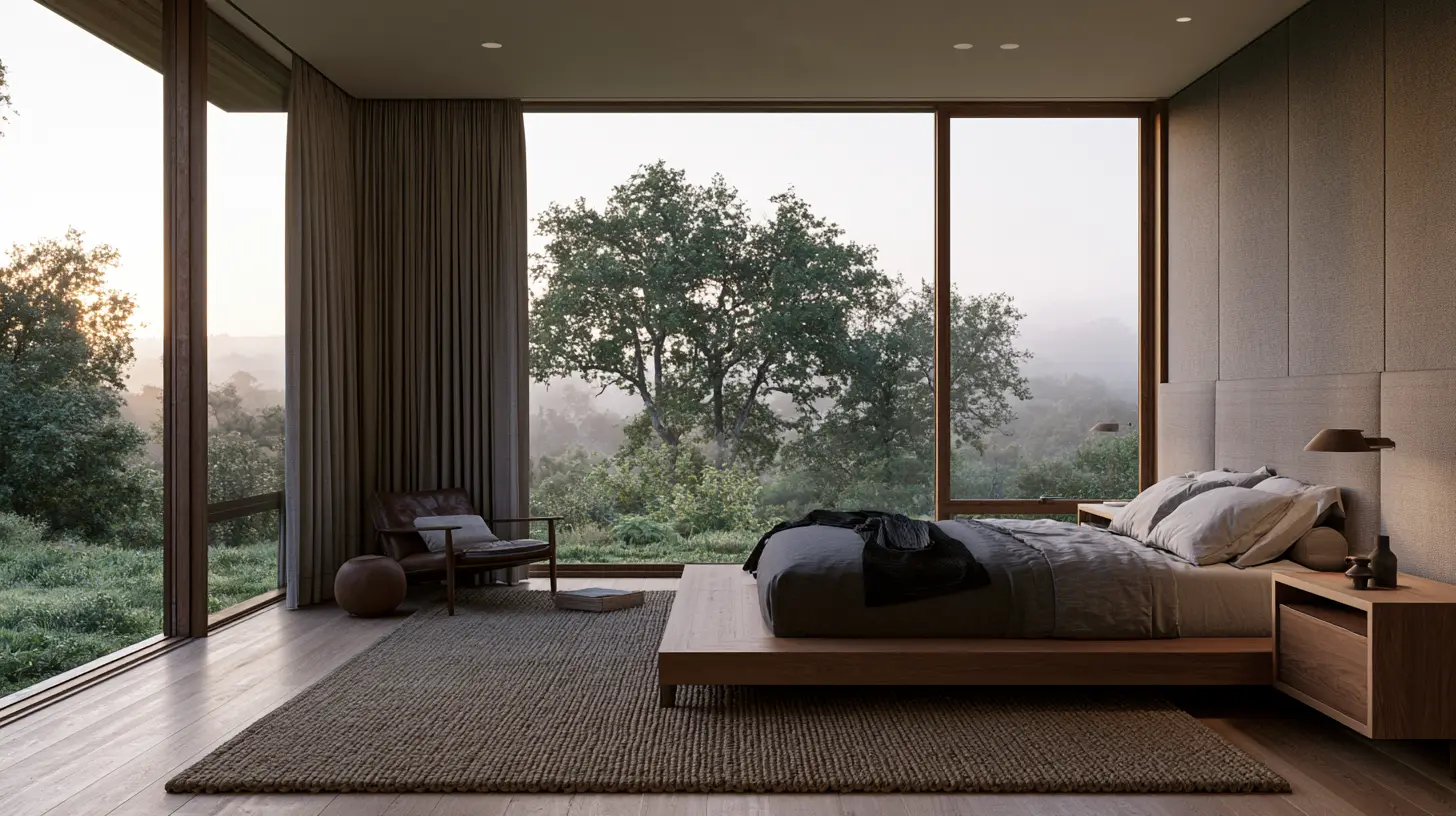
Daylight as a design decision
- [ESTABLISHED]Established
Light exposure entrains the human circadian system through non-visual retinal pathways; that mechanism is well characterized.
- [EMERGING]Emerging
Specific residential design targets for circadian-effective light are not settled, and published metrics are still evolving.
- [ESTABLISHED]Established
Orientation, overhangs, and external shading manage solar gain more effectively than glazing tint alone, and they preserve view and daylight while doing it.
Glare
Daylight that produces glare gets covered up by the occupants, which removes the daylight. We treat glare control as part of delivering daylight, not a separate line item.
Electric lighting
- [ESTABLISHED]Established
We specify fixtures by their measured photometric and spectral characteristics and by how they behave when dimmed, including flicker performance, rather than by product category.
- [EMERGING]Emerging
Evening reduction of short-wavelength light is a commonly recommended strategy; the size of the effect in real homes is still being characterized.
What we do not claim
- [ESTABLISHED]Established
We do not claim that a lighting design will improve sleep or any other health outcome. We describe the light we can deliver and the control the occupant has over it.
Sources
Primary references for this page. Where a statement is graded Emerging, the source supports the question being open, not a conclusion.
- 1. Lighting standards, recommended practices, and research — Illuminating Engineering Society
- 2. Light and Health research program — Lighting Research Center, Rensselaer Polytechnic Institute
- 3. CIE System for Metrology of Optical Radiation for ipRGC-Influenced Responses to Light — International Commission on Illumination (CIE)
Last reviewed August 29, 2026. Reviewed and maintained by Sage Co.
Next: Thermal Comfort